

Anyone can generate a logo now. In 30 seconds, with a basic prompt, your client has a visual on screen. Not necessarily a good one, but it exists. And that has changed something fundamental in how people perceive design.
The problem isn’t that tools have become democratized. The problem is that the number of people who confuse access to tools with understanding the craft has grown massively. Canva, Figma, AI generators, they all create the illusion that design is just technical execution. It isn’t.
Design is being devalued on the execution axis. What stays stable, and what separates a winning brand from an invisible one, is the strategic thinking behind it. If you’ve ever confused your logo with your brand, this article is directly relevant to you.
What follows: what has actually changed, why the Dunning-Kruger level in the industry will keep rising, and what remains unautomatable no matter how good AI gets.
The tool is just the choice. Not the result.
Figma, Canva or a kitchen stove, the instrument doesn’t make branding
When a good designer uses Figma and a weak one uses the same Figma, the results are completely different. The tool is neutral. What makes the difference is what happens in the mind of the person using it: what questions they ask, what context they understand, what decisions they make before opening the application.

A modern reinterpretation of Leonardo da Vinci’s Mona Lisa, created with AI generative design to explore the intersection of classical art and artificial intelligence.
The same applies to AI now. Anyone can generate images with Midjourney. But few know how to evaluate whether what was generated is also appropriate, not just beautiful. That competence doesn’t come from the tool.
What’s actually been democratized, execution, not judgment
What AI has done is dramatically lower the barrier to entry for visual execution. You no longer need 3 years of Photoshop to produce a decent mockup. That’s real and not a bad thing in itself.
The problem is when you confuse execution with strategy. If your brand looks good but communicates nothing, you paid for decoration, not branding. And decoration doesn’t sell.
Why design got so cheap so fast
🧨 The platform wins, the designer loses on price
The AI design tools market grew from $5.54 billion in 2024 to $6.77 billion in 2025, with a projected annual growth rate of 22.2%. Canva now has hundreds of millions of users. Figma has integrated AI directly into the workflow. Adobe Firefly generates variants on demand.
When the platform becomes this accessible, the price for execution inevitably drops. The client who used to ask you how much an icon set costs now makes it in Canva. Not necessarily well, but they make it. And that compresses a part of the execution design market.
🧨 The volume of low-quality work 💩 will grow, not shrink
65% of companies already use generative AI in design, nearly double from 2023. That means a massive volume of visual content produced faster, cheaper and with less aesthetic discernment. The internet will fill with design that looks ok at first glance and disappears from memory in two seconds.

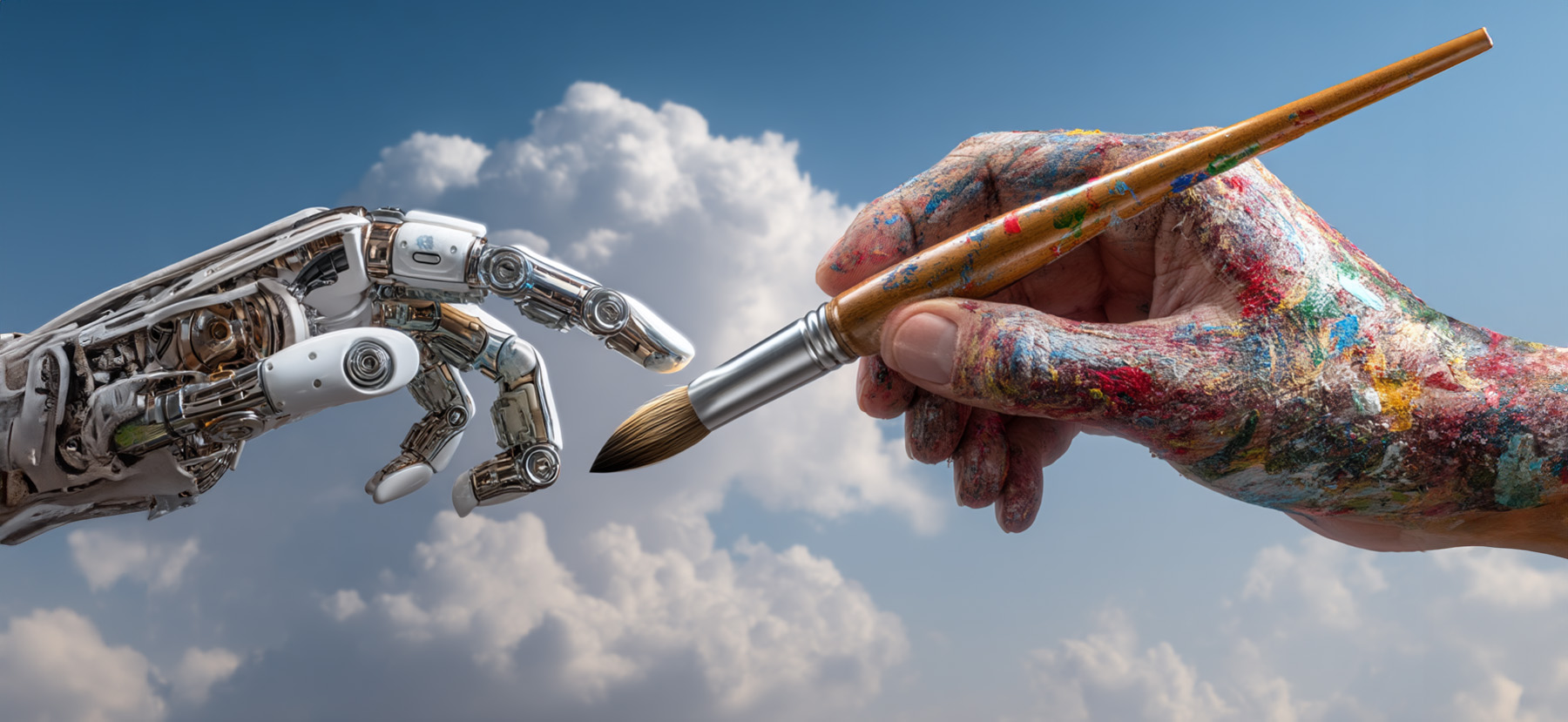
A visual exploration of the confrontation and collaboration between humans and AI, highlighting the interplay of technology and creativity.
Paradoxically, that’s good news for those who think. When everything mediocre becomes invisible, what stands out is design with intention behind it. Not what an algorithm generated at random, but what someone built with a clear strategy.
Dunning-Kruger enters the agency: the client-expert who has opinions on everything
💣 When everyone becomes a designer overnight
The Dunning-Kruger effect describes what happens when you know a little about a field and have the impression you know a lot. In design, that translates to a client who made a logo in Canva and now comes with firm opinions about kerning, color palettes and visual hierarchy.
The problem isn’t that they have opinions. The problem is that they don’t recognize what they don’t know. And that produces bad briefs, counterproductive feedback and decisions made based on personal taste instead of strategy.
A designer working on a shelf packaging project explained it simply: they created something that seemed ‘childish’ to the clients, but it was intentional, because the product was positioned on the bottom shelf, at children’s eye level. Without understanding the strategy, everyone around them saw a mistake.
💣 Why this isn’t a new problem, just an amplified one
Clients who think they’re designers have always existed. What changed is that now they also have a tool that confirms they can produce something. Not something strategically good, but something visual. And that amplifies their confidence in their own judgment.
The answer isn’t to get frustrated. It’s to clarify your role: you’re not selling pixels. You’re selling thinking, context and discernment. If you haven’t communicated that explicitly to the client, the problem is partly yours too.
What can’t be automated: thinking, taste, context
👉 Good design isn’t necessarily the right design
That’s one of the distinctions AI can’t make. It can generate something aesthetically impeccable. But it doesn’t know if that design is appropriate for your audience, for the cultural context, for the desired market positioning.
A winning brand isn’t built with a prompt. The Blue project, the visual identity for the ride-sharing app from the Autonom Group, won GOLD at Transform Awards Europe 2025 precisely because every visual decision came from a clear differentiation strategy in a saturated market. No algorithm could decide that in place of a team that understood the business.

A conceptual image showing a human designer and AI working together, highlighting the synergy between human creativity and artificial intelligence in modern design.
👉 Context is the one variable AI consistently gets wrong
AI doesn’t understand local culture, market timing, the internal tensions of a business, what an entrepreneur wants to communicate when they haven’t yet clearly articulated their vision. All of that requires conversation, intuition, experience accumulated through real projects.
In 2026, the clear trend in the industry is “tactile rebellion”: intentionally human, imperfect design is becoming more valuable precisely because it’s obviously not made by an algorithm. Paradoxically, the more technically perfect content AI produces, the more controlled human imperfection becomes a differentiator.
What this means for your business
✅ Why cheap branding costs more in the long run
We’ve written about this directly: weak branding is more expensive than good branding. More expensive ads because the message doesn’t convert, forced rebrandings after two years, loss of client trust. A logo made in Canva isn’t free, it has a hidden cost in missed opportunities.
Ask yourself: how many clients have you lost because the first contact with your brand didn’t communicate what it needed to? You don’t know the answer because you can’t measure what never walked through the door.
✅ How to identify a branding partner who thinks, not just executes
A good branding partner asks uncomfortable questions before opening any tool. They want to understand the market, the competition, the audience, the positioning. They don’t come with mockups after the first conversation.
If a partner shows you visual variants in the first week without having understood the strategy, you’re dealing with an executor, not a strategist. The difference shows in how strategic branding services compare to what a visual production agency offers.
What difference does a strategic designer make vs one using the same AI tools?
The tool is the same. The questions are different. A strategic designer knows how to evaluate whether what AI generated is also strategically correct, not just aesthetically pleasing. They know how to reject a variant that looks good but communicates incorrectly. They know how to explain why.

An illustrative representation of AI-powered tools used in design, showing how technology supports and enhances creative workflows.
That’s professional judgment, not technical execution. And it’s not learned from YouTube in two weeks.
How do I know if my brand needs thinking or execution?
If you know exactly what you want to communicate, to whom and why, and you just need someone to do the visuals, you need execution. If you’re not sure about positioning, message, how you differentiate from the competition, you need strategic thinking first.
The vast majority of businesses that think they need a new logo actually have an unresolved strategy problem.
Conclusion
Execution design has gotten cheaper. That’s a reality we accept. What hasn’t changed and won’t change is that a strong brand has a strategic decision behind it, not a prompt. The AI trap in branding is exactly this: the illusion that you’re generating value when you’re actually just generating imagery.
Strategic thinking, formed aesthetic taste and the ability to read context remain the only unautomatable things in branding. Everything else becomes a tool, a choice, an option.
If you want a brand built with thinking, not just pixels, at BroHouse we start every project with questions, not mockups. Let’s talk.