
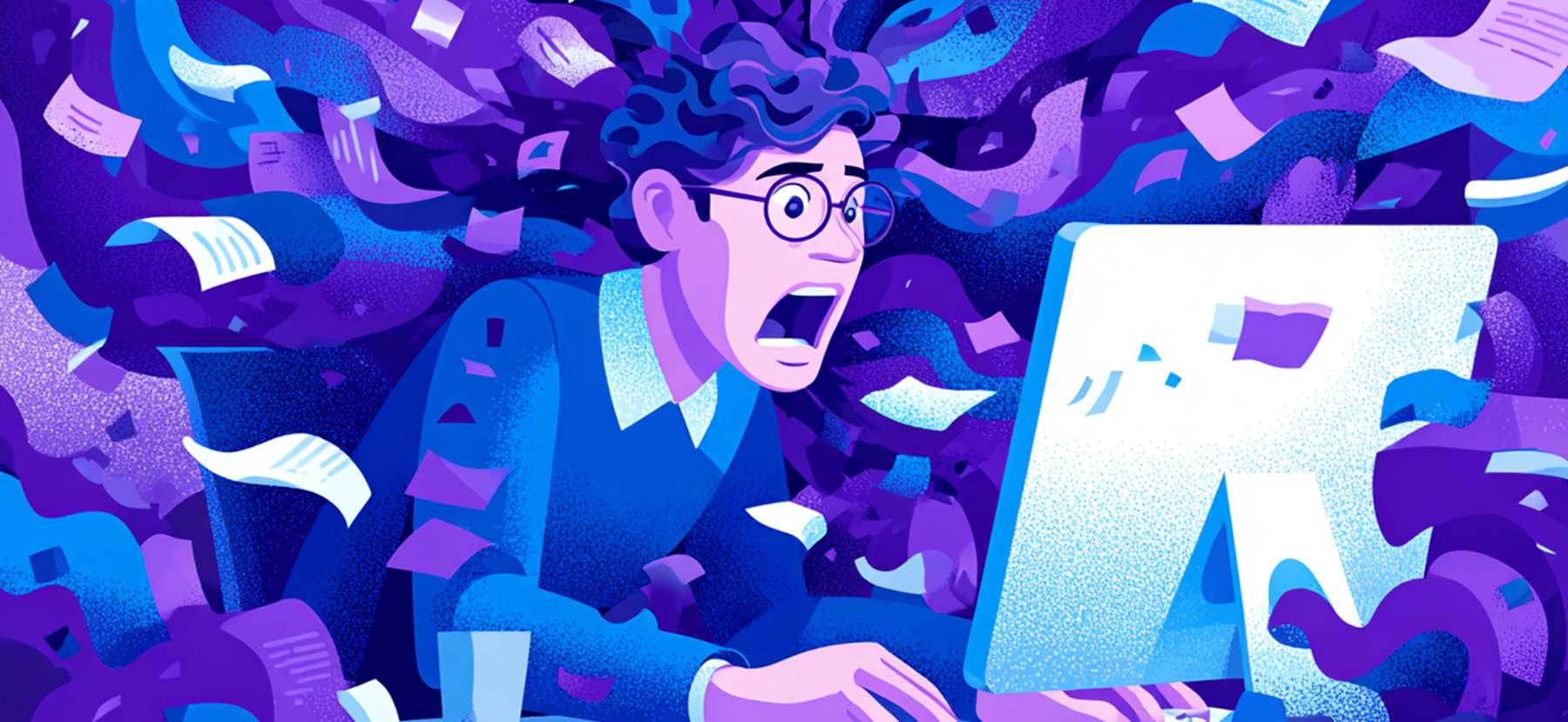

The challenge of creative professions: the “easy to do” perception
Have you ever heard remarks like: “Graphic design? Isn’t that just drawing on a computer?” or “You write a blog? That’s nice, but what’s your real job?”
If you work in a creative field—or know someone who does—the answer is likely yes.
This kind of skepticism reveals a paradox: we celebrate creativity, yet often underestimate the people behind it. This article explores why creative professions are frequently criticized, the real impact of this perception, and how society can shift toward a more accurate and respectful understanding of creative work.
At BroHouse, we see this reality every day. Creative professions are still widely undervalued, often labeled as “not serious” careers—perhaps because they don’t require long academic paths and appear accessible to those who can simply “figure it out along the way.” At BroHouse, this is exactly what we challenge: we build respect for creativity by transforming vision into solid brands—brands that make people say, “Let the specialists handle it.”
The barrier to entry: democratized access vs. real expertise
In creative professions, talent, portfolio, and perseverance often matter more than formal degrees. One can become a top designer without graduating from an art school, or a successful writer without a literature degree.
Unfortunately, the public tends to see only the ease of access, not the difficulty of achieving excellence. By contrast, traditional fields—medicine, law, engineering—impose high entry barriers and objective certification processes, which generate immediate respect. In creative industries, recognition comes only at the very top, and only a few reach that level of excellence.
The illusion of “we all know what looks good”
We all have tastes and opinions about art, design, or music. This familiarity creates the illusion that everyone is an expert, which in turn diminishes respect for professionals.
For example, many feel entitled to give direct feedback to a designer—“Move the logo a bit to the left”—while they would never do the same to a cardiologist or a lawyer. Studies published by Harvard Business Review show that excessive reliance on “everyone’s opinion” can sabotage creative projects precisely because clear evaluation criteria are missing. A major study cited by Forbes further highlights the negative impact of this perception on the income of creative professionals.

Behind creativity lie analysis, decisions, and responsibility.
Real consequences: the cost of underestimating creativity
- The passion tax and financial instability
Creative professions are often treated as hobbies. Low fees fail to reflect ten years of experience, research, and refinement. Forbes has addressed the financial risks of the so-called “passion tax” in creative industries. - Burnout and mental health challenges
The pressure to constantly justify one’s value, combined with instability and the demand for continuous originality, leads to stress and exhaustion. According to Adobe’s State of the Designer report, burnout is one of the most significant challenges facing creative professionals today. - Talent drain and slowed innovation
Highly talented individuals may leave the field altogether or move into corporate environments where creativity is often constrained. As a result, society loses innovators and unique voices. - Economic and cultural impact
Countries such as the United Kingdom and Germany openly recognize the value of the creative industries. In the UK, creative industries grew twice as fast as the rest of the economy before the pandemic, according to the British Council.
Changing the perception: from hobby to profession
- Educate clients and the public
Show not only the final result, but the process behind it: the reasoning behind design decisions, the strategic thinking, and the measurable impact. - Professionalize the way of working
Clear contracts, timelines, and professional invoicing establish credibility and respect. - Demand fair value
Refuse unpaid or undervalued work. Higher standards elevate the entire industry. - Promote success stories and economic impact
Highlight how creativity generates real value—designers who transform products, writers who sell film rights, artists who reshape entire industries.
What defines a “serious profession”?
A profession is “serious” if it solves problems, brings joy, or creates impact. A doctor heals us. A musician moves us emotionally. A designer saves us time and energy. Recognizing creative professions is essential for a society that is not only functional, but also rich in beauty and innovation.
It is time to give creativity the respect it deserves. A world without art, design, and storytelling might function—but it would be poor.
Time for a new mindset
At the end of the day, any profession that solves problems, brings joy, communicates, innovates, or makes life easier and more beautiful is fundamentally serious.
A doctor repairs our heart. A musician touches our heart. A lawyer protects our rights. A UX designer makes technology accessible, saving us time, frustration, and money. All have measurable impact—only the units of measurement differ.
The next time you interact with a creative professional, remember this: they may not wear a white coat or use complex jargon, but behind that seemingly simple solution lies real expertise—in communication, emotion, and the ability to solve complex problems through perception and emotional intelligence.
In an attention-driven, experience-based economy, creative professions are not a luxury—they are a necessity. And granting them the respect they deserve is not only fair; it is a sign of a mature society that understands the true sources of progress and well-being.