


Since August 2, 2026, any image generated or significantly modified with artificial intelligence has to carry a visible label, under Article 50 of the EU AI Act. The reaction was predictable. Panic for some, outrage for others. The kind of person who treats an AI label as a public accusation of fraud.

The problem isn’t using AI — it’s the lack of transparency. Consumers don’t necessarily reject the technology; trust erodes when brands hide how their images are created.
The argument behind that outrage, that the photo isn’t real anymore, is embarrassingly simplistic. A product photo put through three days of retouching, staged lighting, rebuilt composition, cleaned-up texture and adjusted proportions until reality became a loose suggestion, was that real? AI image labeling didn’t invent the transparency problem in branding. It just puts it in writing, for the first time with a legal obligation behind it.
This article isn’t about how to comply with a regulation. It’s about why the product photography industry misled consumers long before AI existed, and what labeling actually means for a brand that takes itself seriously.
What the AI image labeling law actually requires?
Article 50 of the EU AI Act requires that any content generated or significantly modified with artificial intelligence, whether image, video, audio or text, be clearly marked. the European Commission’s official guidance on labeling AI-generated content. The Commission published a set of official icons for this, but using them is optional. The labeling obligation itself is not.
What needs a label and what doesn’t?
The rule specifically targets deepfakes, meaning any image, video or audio that looks authentic at first glance but was artificially generated or altered and mimics real people, objects, places or events. What matters isn’t how much AI was involved, it’s whether the result could be mistaken for reality. There are exceptions too, auxiliary tools like automatic color correction or basic photo cleanup fall outside the rule, along with content that is clearly artistic, satirical or fictional.
Who’s responsible, the brand or the platform?
The labeling duty sits with whoever publishes the image, not with the AI tool and not with the platform hosting it. If you use an image generator for a campaign, the responsibility is yours, wherever that image ends up. The label has to be visible the moment someone sees the image, not buried in a terms and conditions page.
Why “the photo isn’t real” is the wrong argument from the start?
People alarmed by AI labeling assume product photography used to be an honest mirror of reality. It never was.
🤟 Product retouching existed long before AI
The product photography industry spent years building on illusion, not accident. Food stylists use tweezers, small blowtorches, glue and glycerin to make a perishable product hold up for hours under studio lights. a CNBC report on food styling techniques. It’s not an isolated trick, it’s an entire craft, with its own tools and techniques, built specifically to look better than whatever sits on the actual plate.
⭕️ McDonald’s is living proof that “presentation” isn’t an AI invention
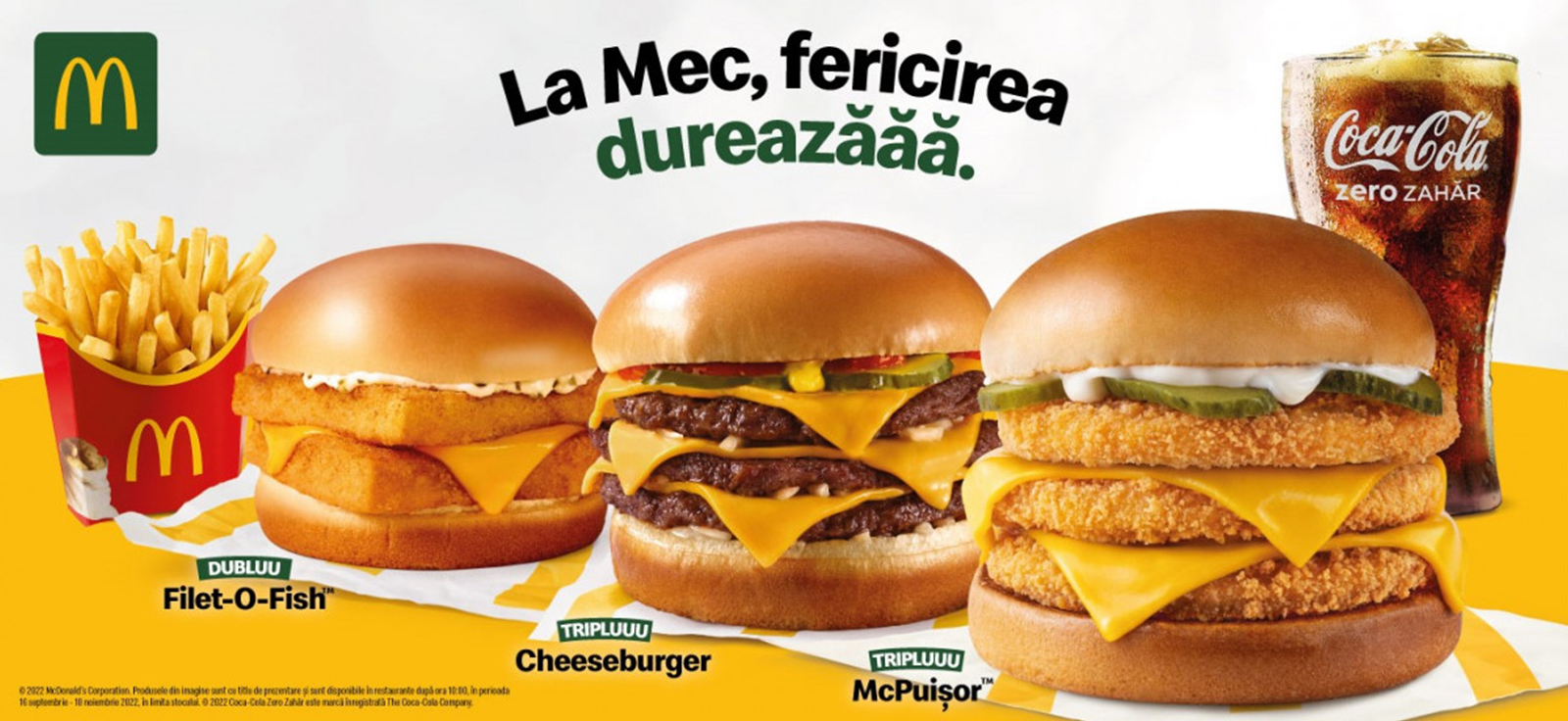
Retouching, styling and composition have been part of advertising long before generative AI. AI can accelerate content production, but creative direction, visual identity and brand consistency remain essential to the branding process.
Over a decade ago, McDonald’s Canada filmed an entire photo shoot process in which a food stylist assembled a burger with the exact same ingredients as the one in the bag, but optimized visually, not for eating. a professional photographer’s account of retouching’s history in food photography. The difference between the ordered burger and the photographed one didn’t come from different ingredients, it came from three or four hours spent entirely on how it looked. Same thing. Different tool. It’s like being upset that someone who wore makeup last night doesn’t look identical the next morning. It wasn’t fake. It was presentation.
What consumers actually think about AI images?
The data is clear about where the real problem sits, and it isn’t where most people assume.
✅ Consumers don’t reject AI, they reject secrecy
More than half of consumers fail to tell an AI-generated photo from a real one, even though most of them believe they could. At the same time, an overwhelming share says transparency about AI use matters, and a significant portion says they’d trust a brand less if AI images were used without disclosure. a Clutch survey on consumer perception of AI images. The message is simple, the problem isn’t the technology, it’s hiding it.
⚠️ Trust erodes at inconsistency, not at the tool
Separate studies on online retail show that variation in the quality and style of product images, whether it comes from classic retouching or AI generation, lowers how reliable a brand or a marketplace appears. Shoppers don’t keep a log of which editing tool was used. They remember whether what arrived at the door matched what was in the photo.
Where the real line sits between presentation and deception?
This is where it gets interesting, because even the industry itself can’t agree on where that line should be.
An AI-generated couch in a living room isn’t the same problem as a visually falsified product
European commerce organizations have asked for a clear exemption for presentation imagery, like generating a living room to contextualize a sofa or enhancing a product photo for commercial purposes, arguing that labeling every one of these materials would dilute the warning so much it would stop meaning anything to consumers. EuroCommerce’s position on AI-generated presentation imagery. Their point isn’t wrong, a generated visual context isn’t in the same risk category as an image simulating a product you can’t actually deliver.
The difference between “looking good” and “promising what you can’t deliver”?
The real line doesn’t run between retouching and AI. It runs between presentation, which highlights what’s already there, and deception, which invents what isn’t. A product shot with good lighting and a clean background is presentation. A product that shows a texture, a size or a function in the photo that it doesn’t have in reality is deception, regardless of which tool produced it.
What AI labeling means for a brand, in practice?
Beyond the philosophical debate, there’s a concrete obligation to manage, and an opportunity few brands are seeing yet.
What you risk by ignoring the obligation?
Non-compliance with labeling requirements carries fines and, more importantly for a brand built for the long term, the reputational risk of being publicly exposed as non-transparent, at the exact moment consumers are paying closer attention than ever. Companies that pull in visual content from agencies, stock suppliers or generation platforms first need to know what’s AI and what isn’t, before they can label anything correctly.
How to turn the label into a brand advantage, not an embarrassment?
A brand that treats the AI label like a confession already has a positioning problem, not a compliance one. Used correctly, AI image generation is a production tool, the same way retouching always was, just faster and more flexible. We build our AI image generation services aligned with brand identity on exactly that premise, the image stays aligned with the brand’s identity regardless of what tool sits behind it, and transparency becomes part of the brand’s story, not a label slapped on at the last minute.
Romanian brands already using AI in advertising
AI adoption in advertising isn’t a hypothetical for the Romanian market, it’s already here. eMAG uses AI for both static assets and TV ads, saying creative decisions stay with people while AI is used mainly for speed and production efficiency.
- Coca-Cola Romania built generative AI into a brand activation, “Santa’s School of Real Magic”, run by Godmother Bucharest, where participants received an AI-generated Santa ID.
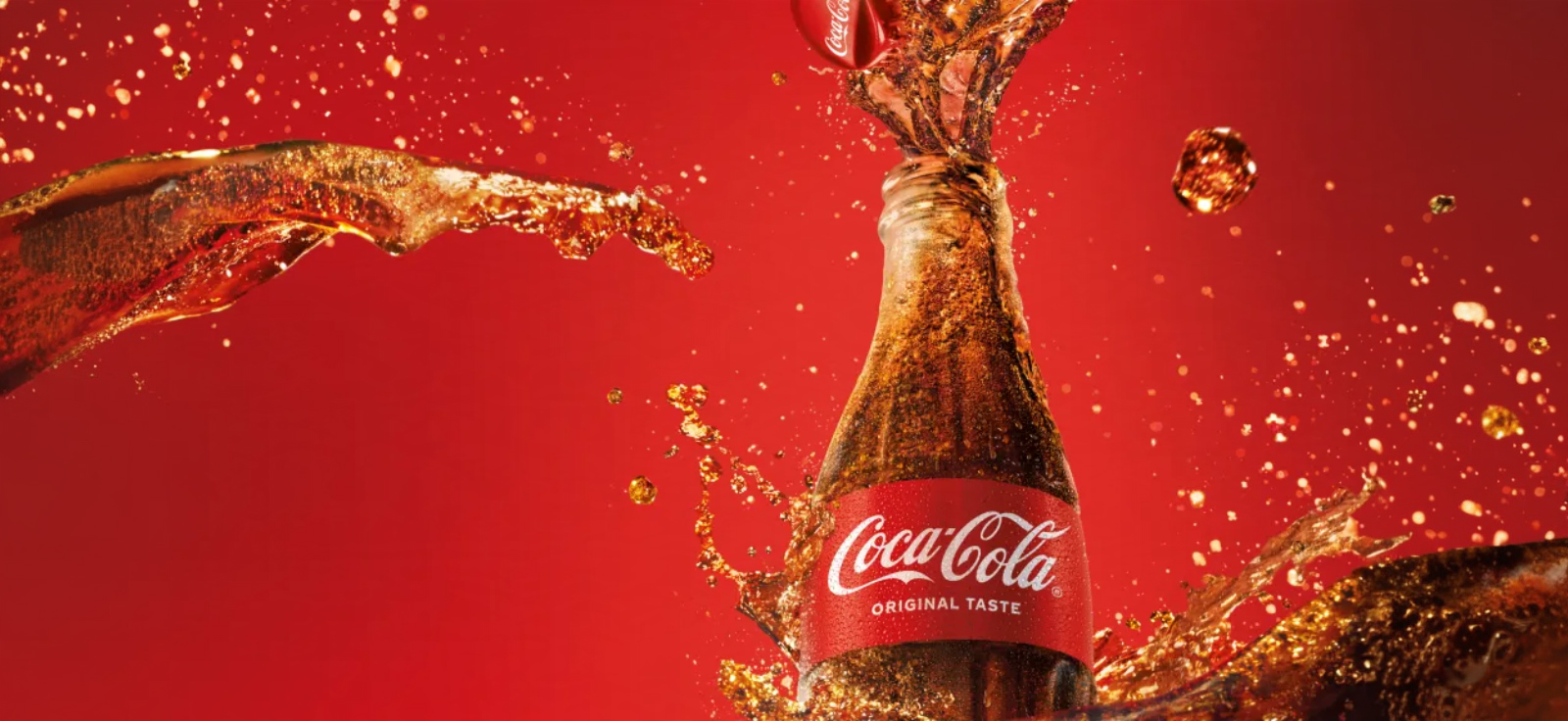
In the case of Coca-Cola, AI is no longer an experiment happening behind the curtain. It is becoming part of the production process. And when the tool changes the nature of the image, transparency is no longer simply a matter of showing the making-of. It becomes part of the communication with the audience.
- Eugenia used a generative AI photo booth at Electric Castle. None of these examples publicly document an explicit “AI” label on the resulting materials, which is exactly where the gap sits, adoption moves fast, transparency lags behind.
- Hochland Romania is one of the first locally observed examples of a brand applying AI labeling in its brand communications. It is a relevant example of a Romanian brand that has started using AI labeling in its commercial communications.

Hochland Romania is a relevant local example because the use of AI is beginning to be accompanied by a visible signal to the audience. It may seem like a small change, but it is an important one: the image is no longer presented solely as the final output, but also in terms of the technology that contributed to creating it.
- eMAG is another relevant Romanian example, having started using AI extensively in advertising production, including AI-generated static and video content. However, unlike Hochland, there is no clear public evidence yet that eMAG has adopted an explicit AI label on its advertising creatives.
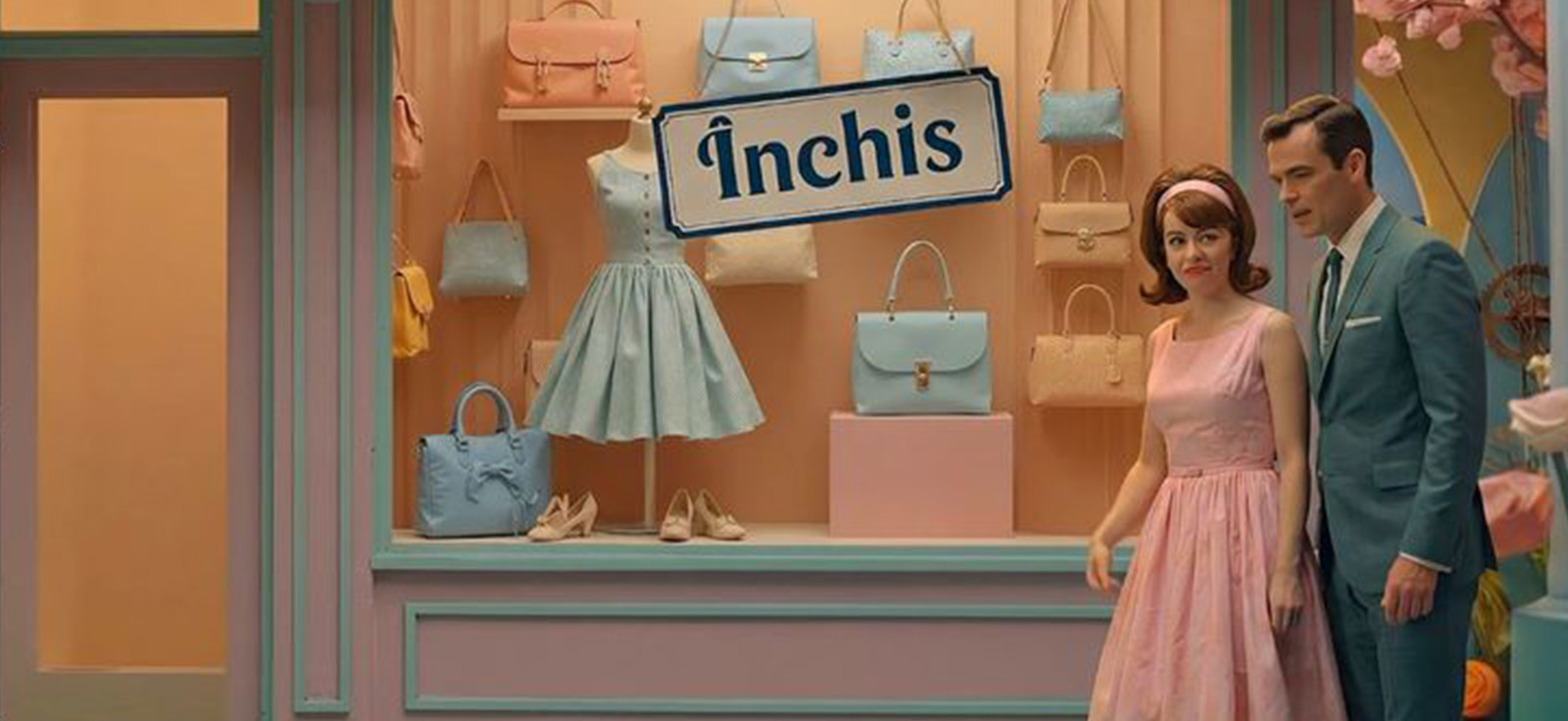
eMAG illustrates another stage of the phenomenon: AI is no longer just a creative experiment, but can become part of the advertising production infrastructure, from static imagery to video. At the same time, using the technology and communicating that it has been used are two different things.
Is AI labeling the future of brand transparency?
Probably, but not in the form most companies are currently discussing it. the AI trap in branding already shows how clients confuse AI speed with brand strategy, and the label risks becoming a checkbox rather than a real exercise in honesty. We talked about the relationship between AI and creativity at TEDx Arad too, and the conclusion held up, the tool doesn’t build the brand, the direction behind it does. branding in the AI era covers exactly this filter, how you separate the good ideas AI generates from the digital noise that comes with them.
Conclusion
The AI label doesn’t solve a new problem. It surfaces an old one, one the image industry comfortably ignored for years, as long as retouching stayed invisible to the consumer. The difference between a “real” photo and a “presented” one never really existed, only the difference in how well the process was hidden.
A serious brand isn’t afraid of transparency, it’s afraid of inconsistency. If your product looks as good in reality as it does in the image, the AI label has nothing to damage. If it doesn’t, the label was never the problem.
At BroHouse we build visual identity and product imagery that holds up under a close look, with or without AI behind it. If you want to talk through what a coherent, transparent image strategy looks like for your brand, get in touch.